Why Recovery May Be the Missing Piece of Wellness
Supplements.
Workout routines.
Cold plunges.
Saunas.
Hormones.
Gut health.
Skincare.
Productivity.
Sleep trackers.
We've built an entire culture around optimization.
Everyone is looking for the next thing that will help them feel better, perform better, age better, look better, or have more energy.
And while many of those things absolutely have value, there is a quieter conversation we are not having enough:
Recovery.
Not rest.
Not laziness.
Not doing less.
Recovery.
The active process of helping the body restore, regulate, adapt, and recover from what it is already carrying.
Stress.
Poor sleep.
Inflammation.
Tension.
Travel.
Hormonal shifts.
Training.
Long work days.
Screens.
Sitting too much.
Life.
The reality is: modern life places a tremendous amount of load on the body.
And over time, many people begin to notice it.
They feel:
Tight
Puffy
Heavy
Exhausted
Inflamed
Stiff
Like their body just is not bouncing back the way it used to
For some people, it shows up as jaw tension and headaches.
For others, it feels like heaviness, sluggishness, puffiness, swelling, or chronic tightness.
Sometimes it feels like poor sleep, tension that keeps returning, or feeling like your body is working harder than it should just to feel normal.
And many people normalize it.
"This is just stress."
"This is just aging."
"I probably just need to work harder."
"I need another supplement."
And then we push through.
But a body that struggles to recover does not simply feel worse.
It often regulates worse.
Moves worse.
Adapts slower.
Tolerates stress poorly.
And over time, carries more load.
Recovery Is Not the Opposite of Performance
This is where wellness sometimes gets it backwards.
Recovery is often treated like a luxury.
Something you do after.
Something optional.
But recovery is not the opposite of performance.
It is what makes performance sustainable.
A body that recovers well often:
Regulates better
Moves better
Adapts better
Handles stress better
Recovers from workouts, travel, tension, and life more effectively
Simply feels better
And often — looks better too.
Because swelling, tension, tissue quality, posture, and inflammation are all influenced by how well the body restores itself.
Recovery Is Not Just for Athletes or Surgery
When people hear the word "recovery," many think about injuries, athletes, or post-surgical healing.
But recovery matters to everyone.
You do not have to be recovering from surgery to feel like your body is under load.
Recovery matters if you are:
Stressed
Tight all the time
Chronically tense
Feeling swollen or puffy
Hormonal or navigating body changes
Traveling often
Sitting too much
Training hard
Sleeping poorly
Simply feeling unlike yourself
Because recovery is not just about healing from something dramatic.
Sometimes it is about helping the body restore capacity.
To regulate.
Adapt.
Move.
And feel more like itself again.
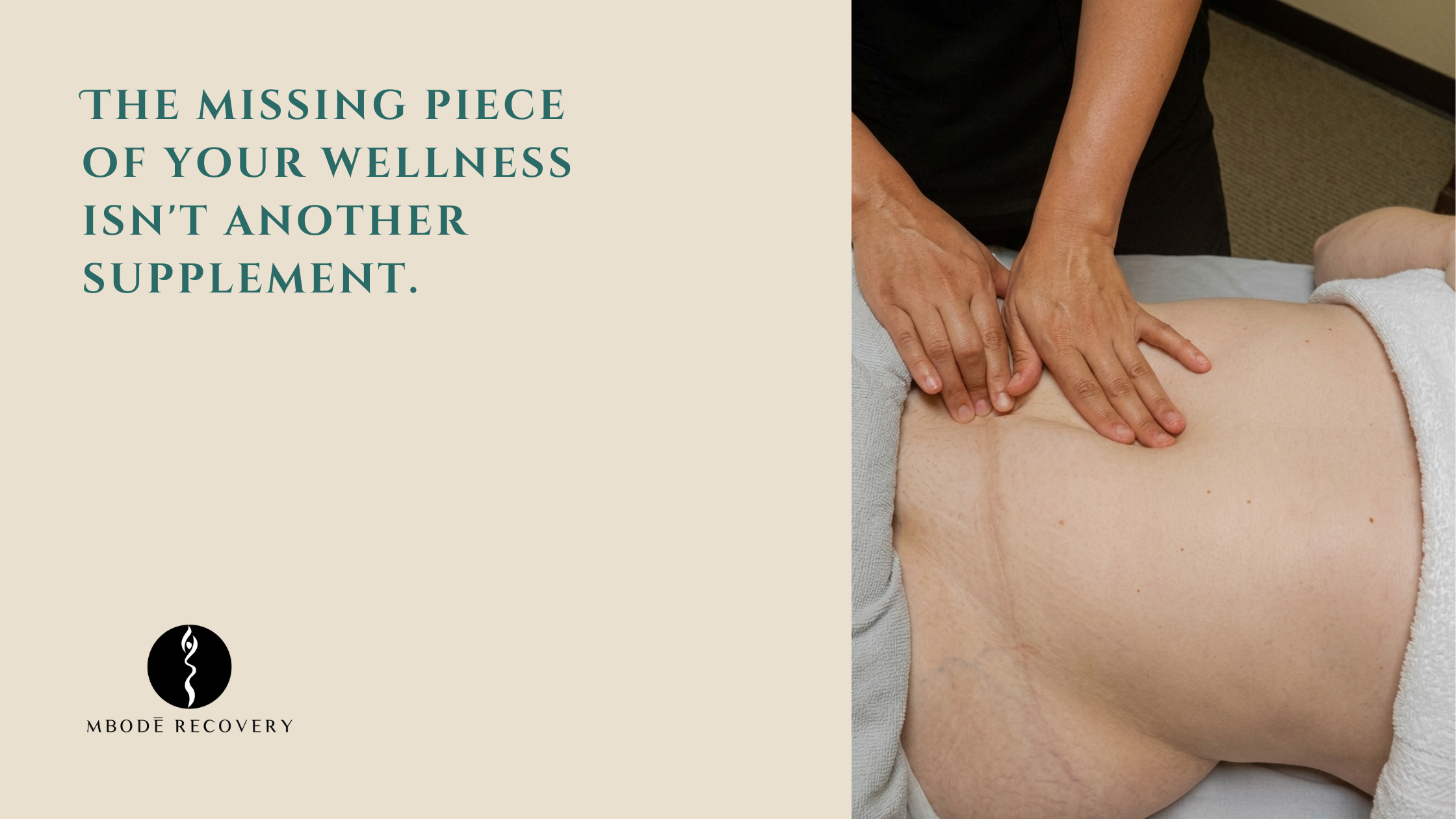
This is something we think about every day at MBODE Recovery — whether someone is post-operative, chronically tense, navigating hormonal shifts, recovering from stress, dealing with swelling or heaviness, or simply not feeling like themselves.
If you're curious about what a session looks like, explore our recovery services to see what MLIM™ addresses and how each session is structured.
Your body does not always need more.
Sometimes it simply needs the opportunity to catch up.
Ready to support your body's capacity to recover? Book a session or consultation and let's build a plan that fits where you are right now.
This content is for educational and informational purposes only. It does not replace the advice of your surgeon or medical provider. Always follow your surgeon's specific post-operative instructions. Individual results may vary.
Frequently Asked Questions About Recovery & Wellness
What does recovery mean in wellness?
Recovery is the body's ability to restore, regulate, adapt, and bounce back from physical, emotional, and physiological load. This includes stress, poor sleep, tension, travel, inflammation, training, hormonal shifts, and the demands of everyday life.
Why do I always feel tight, puffy, or inflamed?
Many things can influence how the body feels, including stress, sleep, posture, long workdays, sitting, movement patterns, inflammation, tension, hormonal shifts, and overall recovery capacity. Often, these experiences are connected rather than isolated.
Is recovery only for athletes or post-surgical healing?
No. Recovery matters for anyone experiencing physical, emotional, or physiological load. It is not only about healing from surgery or intense exercise — it is part of overall wellness.
Can stress affect how the body feels and recovers?
Yes. Stress can influence sleep, muscle tension, movement quality, nervous system regulation, and how the body adapts over time. Many people notice increased tightness, heaviness, or tension during periods of prolonged stress.