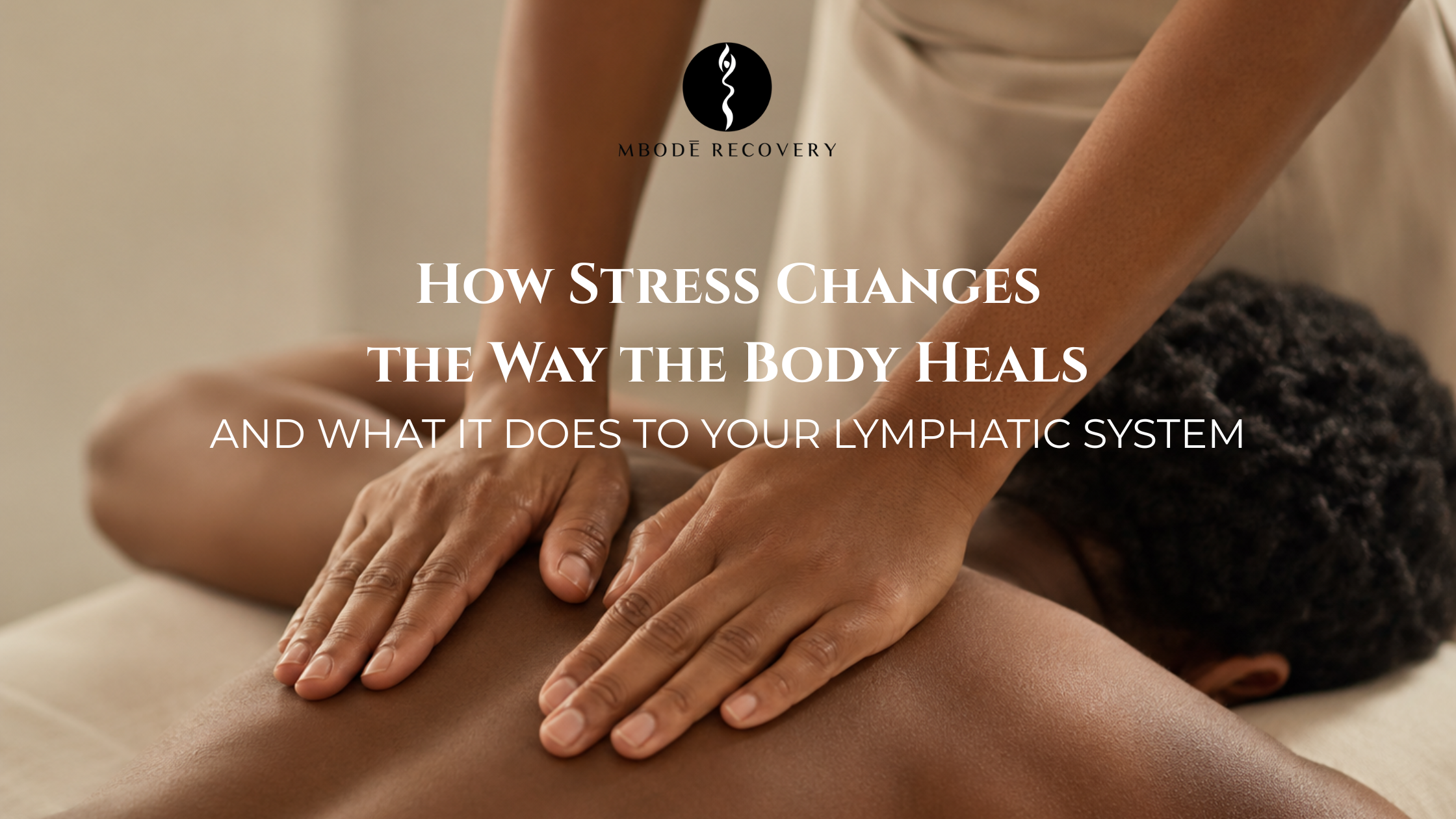
How Stress Changes the Way the Body Heals
And stress is not only "being busy."
Most people think of stress as deadlines, packed schedules, work pressure, or trying to do too much.
But the body experiences stress much more broadly than that.
Sometimes stress looks like:
Poor sleep
Work pressure
Parenting and caregiving
Burnout or chronic overwhelm
Financial strain
Hormonal shifts
Chronic pain
Illness or inflammation
Recovery from surgery
Constant pressure to keep up
And sometimes stress looks like grief.
The loss of someone you love.
The end of a relationship.
A major life transition.
A difficult diagnosis.
A change you never wanted.
The body experiences all of it.
And over time, this kind of cumulative load can affect everything from your hormones to your lymphatic system — the body's drainage and fluid recovery network.
Not always loudly.
Sometimes quietly.
Sometimes in ways people do not immediately connect back to stress.
"Why Do I Suddenly Feel So Off?"
Over time, stress and cumulative load can begin showing up in ways that feel confusing, frustrating, or disconnected.
Maybe it looks like:
Exhaustion — but trouble sleeping
Brain fog or difficulty focusing
Joint pain, heaviness, stiffness, or tension that keeps returning
Jaw clenching or headaches
Feeling puffy, inflamed, swollen, or uncomfortable in your body
Slower healing or recovery than usual
Workouts taking longer to bounce back from
Hormones or menstrual cycles suddenly feeling "off"
Skin flare-ups or changes
Feeling more anxious, emotional, low, or unlike yourself
Cravings, overeating, or feeling harder on yourself than usual
A body that simply does not feel resilient the way it once did
Many people assume:
"Something is wrong with me."
"My body is falling apart."
Or:
"I guess this is just aging."
But often, the body is adapting to load.
Trying to keep up.
Trying to protect.
Trying to function while carrying more than it has fully recovered from.
What Stress Does to Lymphatic Flow
One of the systems most affected by prolonged stress is the lymphatic system.
Unlike the heart, the lymphatic system has no pump. It moves through breath, muscle contraction, and nervous system regulation. When the body is under sustained stress — physical, hormonal, emotional, or post-surgical — lymphatic flow can slow. Fluid accumulates. Tissues become heavy, congested, or inflamed.
This is one of the reasons why lymphatic drainage massage can be so supportive during periods of stress, recovery, or burnout — not because it forces anything, but because it works with the body's own drainage systems to restore capacity and flow.
Healing Does Not Happen in Isolation
This part matters.
Healing is not only about a scar, a sore muscle, hormones, inflammation, surgery, or a symptom.
Healing happens within systems.
Sleep.
Stress.
Inflammation.
Hormones.
Nervous system regulation.
Movement.
Recovery capacity.
Emotional load.
Life.
When stress becomes prolonged, the body may begin adapting in ways that influence how we feel, regulate, recover, and heal.
Sleep may suffer.
Inflammation may feel more noticeable.
Tension patterns may increase.
Hormones may feel more reactive.
Mood, energy, and resilience may feel different.
Recovery may simply feel slower.
This does not mean stress explains everything.
And it does not mean symptoms should be ignored.
But it may help explain why the body sometimes feels slower to recover, more reactive, more inflamed, more emotional, or simply unlike itself.
Sometimes the Body Is Not Failing — It Is Carrying Too Much
Many people think:
"My body is broken."
But often the body is adapting.
Trying to keep up.
Trying to survive what it has been carrying.
Poor sleep.
Stress.
Grief.
Hormonal shifts.
Inflammation.
Life.
At some point, the body often begins asking for something different.
Not more pressure.
Not more punishment.
Not more pushing.
Recovery.
Because when the body begins recovering better, people often notice something bigger than fewer symptoms.
They feel more like themselves again.
More emotionally steady.
Clearer.
Lighter.
More resilient.
Sleeping better.
Feeling more comfortable in their body.
Wanting to do the things they used to enjoy.
Feeling more hopeful.
Sometimes even feeling more attractive — not because everything changed overnight, but because they feel more alive inside their own body again.
More engaged.
More present.
More excited about what life might bring.
Because healing is not only about reducing symptoms.
Sometimes healing is about getting parts of yourself back.
Navigating recovery, stress, or inflammation and want to understand your body better? Join the MBODE Recovery community and get instant access to our free guide on stress, lymphatic health, and recovery. As a member you'll also receive weekly insights from Mahalath — practical, clinician-led education delivered to your inbox. → Get instant access
Recovery Matters More Than Most People Realize
This is something I think about often in my work at MBODE Recovery.
Yes, in post-surgical healing.
But also in people navigating chronic tension, swelling, stress, hormonal shifts, heaviness, inflammation, burnout, grief, or simply feeling unlike themselves.
Lymphatic massage is one of the tools we use to support the body when it has been carrying too much — post-surgery, post-burnout, or anywhere in between. If you're in Atlanta or searching for lymphatic drainage massage near you, MBODE Recovery offers structured, MLIM™-based recovery support that works with your body's systems — not against them.
Because recovery is not only about surgery.
Recovery is part of wellness.
And sometimes the question is not:
"What is wrong with me?"
But:
"What has my body been carrying while trying to heal?"
Frequently Asked Questions About Stress, Healing & Recovery
What does lymphatic drainage massage do?
Lymphatic drainage massage supports the body's ability to move fluid, reduce swelling, and clear metabolic waste. It can also support nervous system regulation and recovery — making it beneficial not just after surgery, but during periods of chronic stress, hormonal shifts, or burnout. Learn more about our services here.
Can I find lymphatic drainage massage in Atlanta?
Yes. MBODE Recovery offers MLIM™-based lymphatic drainage massage in Atlanta, GA and surrounding areas. Sessions are available in-studio or at your location — we travels up to 20 miles from Atlanta for clients who prefer care at home or in their recovery space. Whether you are post-surgical, managing chronic swelling or inflammation, or seeking structured, system-based recovery support. Book your session here. Sessions are available as soon as you are cleared. Always follow your surgeon's specific post-operative instructions if you are post-operative.
What is lymphatic massage good for?
Lymphatic massage can support reduction of swelling and fluid retention, improved tissue mobility, nervous system regulation, and overall recovery capacity. It is commonly used post-surgery and is increasingly recognized as beneficial for stress, hormonal changes, and inflammatory conditions.
Is facial lymphatic massage different from body lymphatic massage?
Facial lymphatic massage uses lighter, more specific techniques to support drainage in the head and neck region. It is particularly beneficial for jaw tension, post-procedure swelling, sinus congestion, or nervous system dysregulation originating in the head and neck. Always consult your surgeon before beginning any post-operative facial work.
Can stress affect healing?
Yes. Stress can influence sleep, inflammation, nervous system regulation, hormones, tension patterns, and recovery capacity — all of which can influence how the body adapts and heals over time.
Can grief affect the body physically?
Yes. Grief is a physiological stressor, not only an emotional experience. Many people notice fatigue, poor sleep, brain fog, appetite changes, tension, heaviness, inflammation, or feeling unlike themselves during periods of grief or major life change.
Why do I feel exhausted but still tense?
Many people experience exhaustion paired with tension during periods of prolonged stress. The body may feel tired while simultaneously carrying muscle guarding, nervous system load, poor sleep, inflammation, or emotional stress.
Can stress affect hormones or menstrual cycles?
Stress can influence hormone regulation and may contribute to cycle changes, mood shifts, sleep disruption, cravings, or feeling emotionally and physically "off."
Why am I healing or recovering slower than usual?
Sleep quality, inflammation, stress load, hormones, nervous system regulation, nutrition, movement, and recovery capacity can all influence how quickly the body feels like it is bouncing back.
Is recovery only for surgery or athletes?
No. Recovery matters for anyone navigating physical, emotional, or physiological load — including stress, burnout, poor sleep, hormonal shifts, grief, chronic tension, and everyday life.
Want the full guide on stress, healing, and lymphatic recovery? It's free — and it's yours the moment you join. → Join & access the free guide
This content is for educational and informational purposes only. It does not replace the advice of your surgeon or medical provider. Always follow your surgeon's specific post-operative instructions. Individual results may vary.