
Why Fibrosis Forms After Surgery — And What Actually Determines How It Heals
Most people who develop fibrosis after surgery are told the same thing.
It's scar tissue. It's part of healing. Give it time.
That's not entirely wrong.
But it leaves out the most important part — why some tissue heals smoothly and some doesn't. And what you can actually do about it. If you are working with a post-surgical recovery specialist, our post-surgical recovery services are designed around exactly this understanding.
This post covers what fibrosis really is, why it forms the way it does, and why the approach to treating it matters more than most people realize.
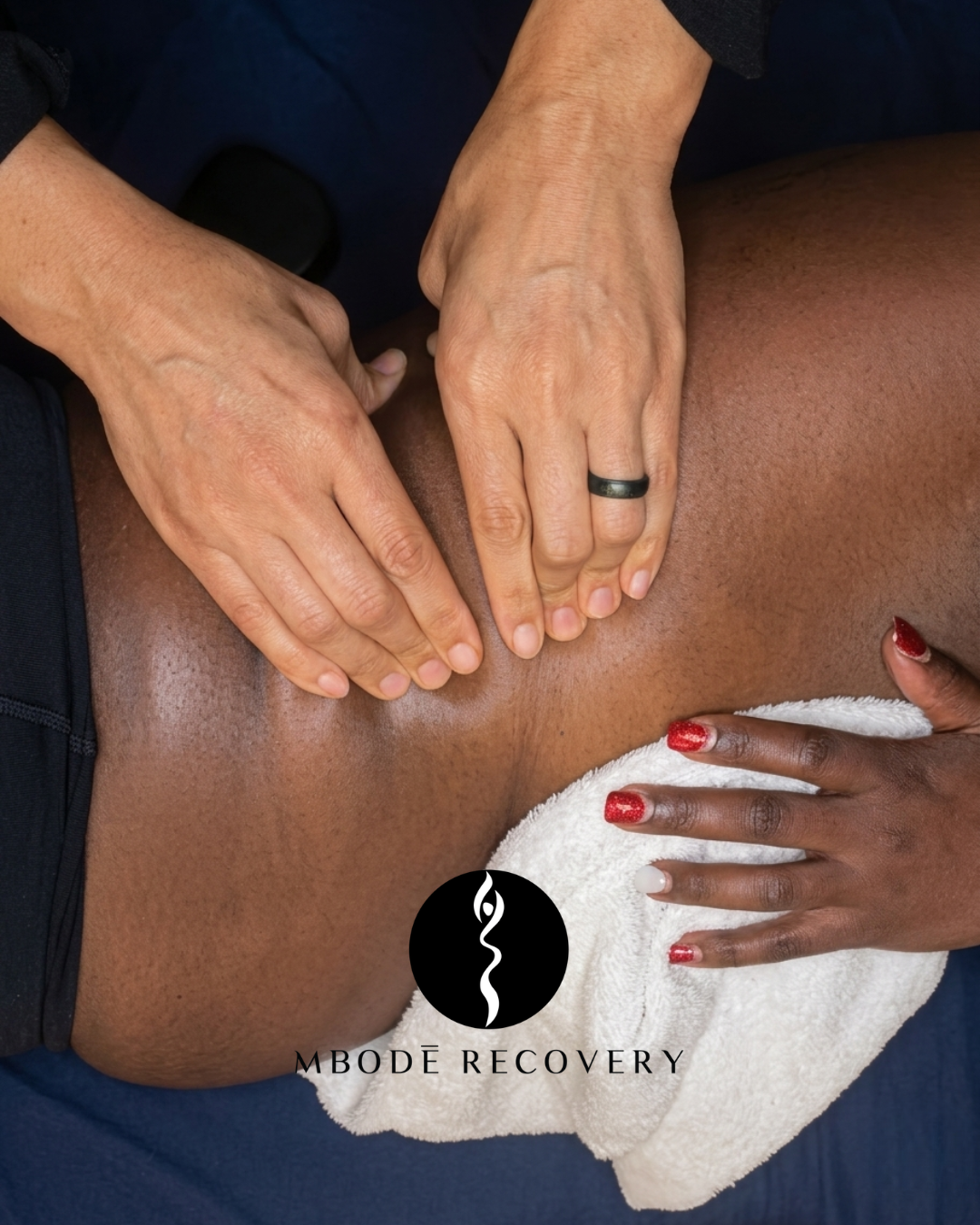
What Fibrosis Actually Is
Fibrosis is often described simply as scar tissue. That is a starting point — but it does not capture the full picture.
After surgery, the body initiates a repair process. Cells move in. Collagen is laid down. The tissue begins to rebuild.
In an ideal healing environment, that process produces tissue that is organized, mobile, and functional.
But when the healing environment is disrupted — by excess fluid, poor compression, lack of movement, or tissue that was significantly traumatized during surgery — the repair process can produce tissue that is:
Thicker than normal
Denser and less pliable
Unevenly distributed
Restricted in movement
That is fibrosis. And it is not random. It is the direct result of how the tissue formed during the healing window.
Why It Forms the Way It Does
Understanding fibrosis means understanding the conditions that shaped it.
Surgical Disruption
The more tissue is disrupted during a procedure — through incisions, suction, or manipulation — the more repair response the body initiates. More disruption does not automatically mean worse fibrosis. But it does mean the healing environment needs more support.
Fluid Accumulation
When fluid — including lymphatic fluid — pools in the surgical area, it changes the tissue environment. Proteins in that fluid can begin to organize over time. If the fluid is not cleared efficiently, it creates conditions where fibrosis forms more densely.
Compression
Compression influences how tissue settles. But fit matters. Compression that is too tight, uneven, or worn inconsistently can create pressure points that contribute to uneven fibrosis rather than preventing it.
Movement
Early, gentle movement supports lymphatic flow and prevents tissue from becoming stagnant. Tissue that stays immobile during the healing window is more likely to develop restricted fibrosis.
Timing of Intervention
Tissue is most responsive during the early healing window — when it is still forming and adaptable. Waiting too long does not make treatment impossible. But it does make it more complex.
Why "Just Breaking It Up" Does Not Work
This is one of the most common misconceptions in post-surgical care.
Fibrosis is not something to force through. Aggressive pressure applied to tissue that is not ready — or that is still in an inflammatory phase — can increase reactivity, disrupt healing, and make the fibrosis more entrenched.
Effective treatment is not about pressure. It is about assessment.
Before any intervention, a clinician needs to understand:
What stage the tissue is in
Whether fluid is still a factor
How the fibrosis developed
What the tissue is ready to respond to
That assessment changes everything — the pressure used, the direction of work, the sequencing of treatment, and the outcome.
The Role of Lymphatic Function
Fibrosis and lymphatic congestion are closely connected — and often misunderstood as separate issues. Our lymphatic drainage sessions are built around this exact relationship.
The lymphatic system is responsible for clearing excess fluid, cellular debris, and inflammatory byproducts from healing tissue. When that system is overwhelmed or disrupted after surgery, fluid accumulates. That fluid changes the local tissue environment and creates conditions where fibrosis forms more densely.
This is why lymphatic support after surgery is not just about reducing swelling. It is about creating the conditions where tissue can heal and reorganize properly.
Addressing lymphatic congestion and fibrosis together — not sequentially — produces better outcomes than treating either one in isolation.
What Proper Assessment Looks Like
Effective fibrosis treatment starts before any hands-on work begins.
A thorough assessment should identify:
The type and density of fibrosis present
The stage of healing the tissue is in
Whether lymphatic congestion is a contributing factor
How the tissue is responding to palpation
What the appropriate intervention looks like based on all of the above
This is the difference between a technique and a clinical framework.
Techniques are applied. Frameworks are built on understanding what is actually happening in the tissue — and adjusting based on that.
When to Seek Treatment
The most important window for fibrosis intervention is early — within the first weeks to months after surgery, while tissue is still forming and responsive. Explore our post-operative recovery packages to understand what early support can look like.
That said, fibrosis that has been present for months or even years can still be addressed. It requires more time and a different approach — but it is not a closed case.
Signs that fibrosis may need clinical attention:
Areas that feel hard, dense, or rope-like under the skin
Uneven texture that has not resolved with time
Restricted movement in the area
A seroma that took a long time to resolve or recurred
Results that look or feel different than expected after surgery
If any of these are present — that is information. And it deserves a clinical response, not watchful waiting.
How Scar Tissue Affects Other Systems in the Body
Fibrosis and scar tissue are often treated as local issues — something that affects only the area where surgery took place. But the body does not work in isolated compartments.
Lymphatic Flow
The lymphatic system relies on open pathways through the tissue to move fluid efficiently. When fibrosis develops in or around those pathways, it can compress or restrict lymphatic vessels — contributing to chronic swelling, heaviness, and a tissue environment that becomes harder to treat over time.
Nerve Sensitivity
Fibrotic tissue can compress or entrap nerves in the surrounding area. This shows up as numbness, tingling, hypersensitivity, or a burning sensation. Some clients describe feeling like the skin does not belong to them. This is often a nerve response to the mechanical pressure fibrosis creates.
Fascial Restriction
Fascia — the connective tissue that runs throughout the body — is directly affected by fibrosis. When one area becomes restricted, the tension does not stay local. It pulls. It compensates. Adjacent areas begin to adapt, and that compensation pattern can create discomfort in areas that seem entirely unrelated to the original surgery.
Mobility and Posture
When fibrosis restricts tissue across a larger surface — the abdomen, thighs, or flanks — it can alter how a person moves. Compensation creates new strain patterns in the muscles and joints over time.
Psychological Impact
Living in a body that looks or feels different than expected after surgery affects how people relate to themselves. Chronic discomfort, visible irregularities, and the frustration of feeling like something is wrong that no one can explain carries a real weight. Addressing the tissue often addresses more than the tissue.
Can Fibrosis Be Treated Years After Surgery?
Yes — and this is one of the most important things to understand.
Fibrosis that has been present for years is more established. The tissue has organized, layered, and adapted over time. That does make it more complex to work with. But complex is not the same as untreatable.
What can improve with the right approach:
Tissue texture and palpable density
Surface appearance and contour irregularities
Mobility and range of movement in the area
Lymphatic flow through and around affected tissue
Discomfort associated with restricted or compressed tissue
The goal is not erasure. It is meaningful, functional improvement that changes how the tissue feels and how the body moves through it.
If you were told there is nothing that can be done because too much time has passed — that is worth reconsidering. Contact us to discuss where your tissue is now.
Conclusion
Fibrosis after surgery is common. But common does not mean inevitable or untreatable.
The tissue that forms during healing is shaped by dozens of factors — most of which can be influenced with the right support at the right time.
Understanding how fibrosis developed is what makes it possible to address it effectively. Without that understanding, treatment is guesswork.
If you are a post-surgical client wondering why something still does not feel right — or a provider working with these cases and looking for a more systematic approach — the answer starts in the same place: understanding what is actually happening in the tissue. Learn more about Mahalath Moore and the clinical framework behind this work, or book a session to get started.
Frequently Asked Questions About Fibrosis After Surgery
Is fibrosis permanent after surgery?
Not necessarily. Fibrosis that has been present for a long time is more established and takes more time to address — but it is not automatically permanent. Tissue remains responsive to the right intervention even months or years after surgery. Early intervention produces faster results. Late intervention still produces results.
How long does fibrosis last after liposuction?
There is no single answer — because duration depends on how the fibrosis formed and whether it received proper support during healing. Some tissue softens and reorganizes within a few months with the right care. Other cases can persist for a year or longer without targeted treatment. Time alone is rarely enough.
What does fibrosis feel like after surgery?
Most people describe it as areas that feel hard, dense, lumpy, or rope-like under the skin. Some describe tightness or restriction in the area. It may be tender to the touch or feel noticeably different from surrounding tissue. If something feels consistently different from the tissue around it, fibrosis is worth considering.
Can fibrosis get worse over time?
Yes — if left unaddressed during the early healing window, fibrosis can become more dense and layered as the tissue continues to organize. Tissue that might have responded quickly to intervention at six weeks becomes a more complex case at six months. This is why the timing of treatment matters.
Is massage enough to treat fibrosis after surgery?
It depends entirely on the approach. General massage applied without a clear understanding of what stage the tissue is in can be ineffective — and in some cases can aggravate the area. Effective treatment requires clinical assessment first. Book a session with Mbode Recovery to start with the right assessment.
What is the difference between a seroma and fibrosis?
A seroma is a collection of fluid that forms in the space where tissue was disrupted during surgery. Fibrosis is the hardening and reorganization of tissue that can develop during and after healing. They are different — but connected. When a seroma takes a long time to resolve, the surrounding tissue is exposed to that fluid environment for an extended period, increasing conditions for dense fibrosis.
DISCLAIMER
This content is for educational and informational purposes only. It does not replace the advice of your surgeon or medical provider. Always follow your surgeon's specific post-operative instructions. Individual results may vary.