Postpartum Swelling and Body Changes After Birth: What Recovery Can Feel Like
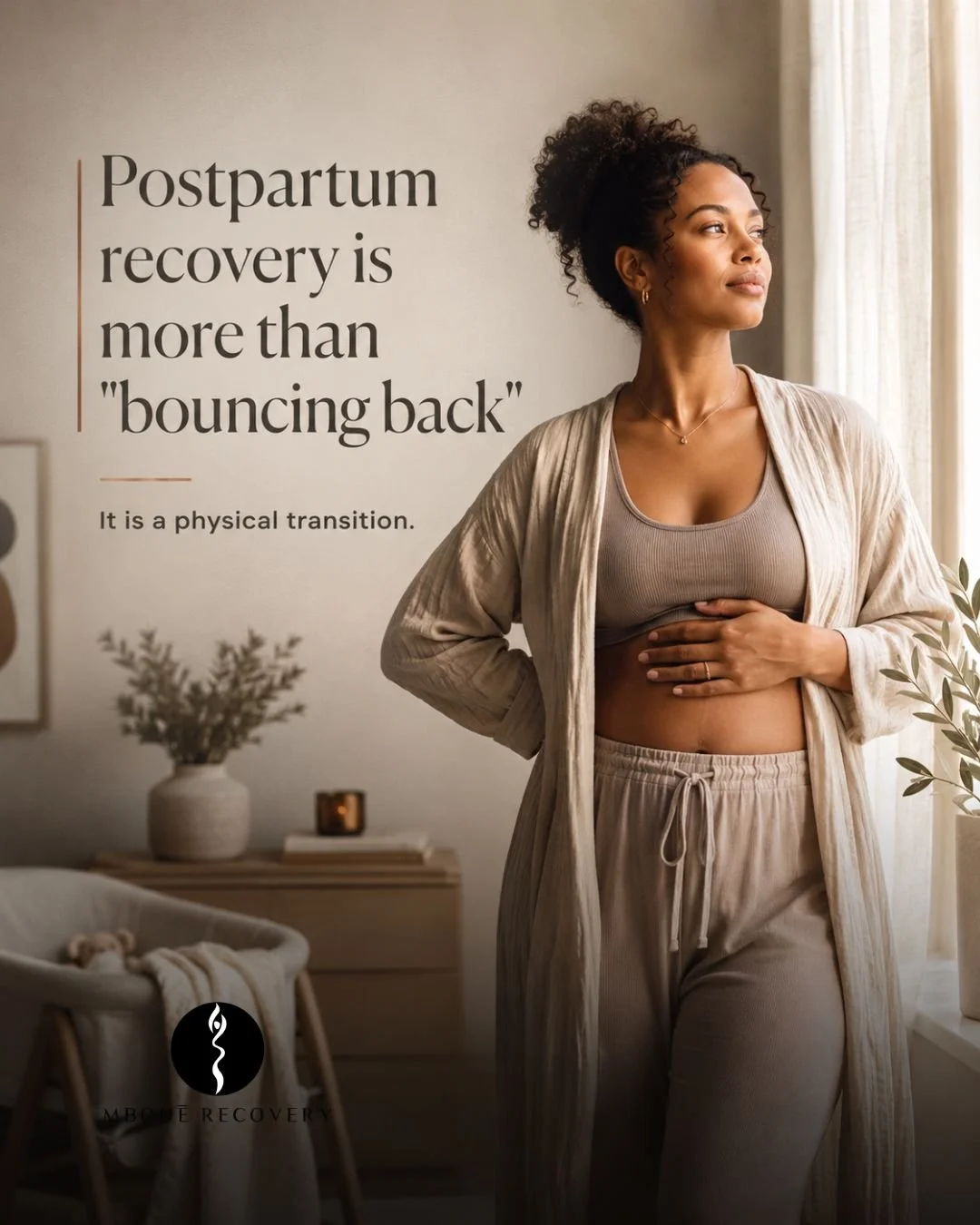
Postpartum recovery is often described as a period of “bouncing back.”
But your body is not simply returning from one event.
It has moved through pregnancy and birth, and now it is adapting to feeding, carrying, disrupted sleep, new movement patterns, hormonal changes, and the physical demands of caring for a baby.
That is why postpartum recovery can be felt throughout the body.
You may notice swelling in your feet or legs, soreness in your back or neck, breast tenderness, abdominal discomfort, fatigue, or a general sense that your body has less capacity than it did before.
Understanding the broader picture can make it easier to recognize what may be part of recovery, what deserves more support, and what should be medically evaluated.
Why Does Your Whole Body Feel Different After Birth?
Postpartum recovery begins immediately after childbirth, but the body does not follow one universal timeline.
And recovery is not happening in isolation.
Your body may simultaneously be adapting to:
changes after pregnancy and birth
disrupted or reduced sleep
feeding positions
repeatedly lifting and carrying your baby
new demands on the neck, shoulders, arms, back, and hips
abdominal and pelvic changes
fluid shifts
breast changes
reduced time for rest and recovery
This is one reason postpartum recovery should be viewed as a whole-body transition, rather than only an abdominal or pelvic-floor issue.
What Causes Postpartum Swelling?
Postpartum swelling is commonly noticed in the legs, ankles, feet, hands, or other areas after childbirth.
During pregnancy, the body carries more fluid than usual. After delivery, that fluid does not disappear instantly.
Some people may also have received IV fluids during labor or a cesarean birth, which can temporarily add to the amount of fluid the body is managing.
You may notice:
puffy feet or ankles
heavy legs
tighter shoes
swollen fingers
general fluid heaviness
fullness or tenderness in the breasts
This does not automatically mean something is wrong with the lymphatic system.
Swelling simply means excess fluid is present in the tissues. Hormonal changes, inflammation, medications, prolonged sitting or standing, circulation, and other health factors can all influence fluid balance.
If you want to understand that distinction more deeply, read What Slows Lymphatic Drainage? Understanding Edema, Swelling and Fluid Retention.
How Long Does Postpartum Swelling Last?
One of the most common questions after birth is:
How long does postpartum swelling last?
For many people, swelling begins improving during the first several days and may continue settling over the following couple of weeks.
There is no single timeline that applies to every postpartum body.
The amount and duration of swelling may be influenced by:
how much fluid the body retained during pregnancy
IV fluids received during labor or delivery
activity and mobility
type of delivery
individual circulation
health history
other medical conditions
What matters just as much as the timeline is how the swelling behaves.
Swelling that is slowly improving is different from swelling that appears suddenly, becomes severe, or affects one side of the body significantly more than the other.
When Postpartum Swelling Needs Medical Attention
Postpartum swelling should not automatically be dismissed as “normal.”
Contact your healthcare provider promptly if you experience symptoms such as:
sudden or severe swelling
swelling, pain, warmth, or tenderness mainly affecting one leg
chest pain
shortness of breath or difficulty breathing
a severe or persistent headache
vision changes
fever
rapidly worsening symptoms
If something feels significantly different from your expected recovery, medical evaluation should come first.
Why Does Your Back Hurt Postpartum?
Postpartum back pain is another common concern.
Pregnancy changes posture and load distribution. After birth, the physical demands change again.
Suddenly, the body may spend hours:
holding a baby
feeding
rocking
bending over a crib
carrying a car seat
sitting in unfamiliar positions
Discomfort may show up as:
lower-back tension
upper-back fatigue
tight hips
neck stiffness
sore shoulders
tired arms or wrists
The postpartum upper body, in particular, takes on a completely new workload.
The Physical Load Nobody Talks About
Holding. Feeding. Rocking. Carrying. Repeating.
These movements may seem small individually.
Repeated throughout the day and night, however, they create significant physical demand.
Feeding positions may keep the shoulders rounded forward.
Holding a baby can repeatedly load one arm more than the other.
Looking downward can increase strain through the neck and upper back.
Sleep disruption may also mean those tissues have less time to recover before being asked to do it all again.
This is why postpartum recovery should not focus exclusively on the abdomen.
The neck, shoulders, upper back, lower back, hips, arms, and overall recovery capacity deserve attention too.
Why Does Your Whole Body Ache After Birth?
Postpartum body aches can have more than one contributor.
Your body has experienced pregnancy and childbirth, potentially followed by long periods of sitting, feeding, carrying, and interrupted sleep.
Muscles may also compensate for changes in abdominal and pelvic support.
Sometimes the body is simply carrying more physical demand with less opportunity to recover.
That does not mean every ache should automatically be labelled “postpartum.”
New, severe, persistent, or worsening pain should be discussed with your healthcare provider.
But looking at postpartum recovery as a whole-body process helps explain why discomfort can sometimes be felt far beyond the area directly involved in birth.
Postpartum Fatigue Is More Than Feeling Sleepy
There is tired.
And then there is postpartum fatigue.
Your body is recovering while also caring for another human being, often with dramatically disrupted sleep.
That can affect:
physical energy
concentration
motivation for movement
exercise tolerance
soreness
recovery between demanding days
Postpartum recovery therefore cannot be measured only by whether a wound has healed or a certain number of weeks have passed.
Capacity matters too.
If fatigue is severe, worsening, persistent, or feels out of proportion to your circumstances, speak with your healthcare provider. Fatigue can have many causes and deserves appropriate evaluation when it feels unusual or excessive.
Postpartum Recovery Is Not Linear
One of the most useful things to understand about postpartum recovery is this:
Feeling better one day does not mean every day after it will feel better too.
You may have a day with more energy, more movement, and more capacity.
Then after a difficult night, increased feeding demand, more time on your feet, or a particularly busy day, your body may feel heavier or more sensitive again.
That does not automatically mean recovery is going backwards.
It may simply mean today’s body has a different amount of capacity.
This is why supportive care should not be rigid.
Instead of only asking:
“What do we normally do postpartum?”
A better question is:
“What does this body have the capacity for today?”
That principle is central to MLIM™, where pressure, pacing, sequencing, breath integration, and hands-on care are adapted to the body’s current response rather than delivered as one fixed routine.
Where Postpartum Massage and Lymphatic Support May Fit
Some women choose postpartum massage or lymphatic-focused bodywork as one part of their broader recovery support.
The purpose is not to “fix” the postpartum body or force it back to its pre-pregnancy state.
Supportive bodywork may instead respond to what the body is presenting at that moment.
Depending on the individual and what is medically appropriate, supportive care at MBODE may include:
gentle lymphatic-focused work
breath and diaphragm integration
neck and shoulder support
back and hip work
abdominal support when appropriate
pressure adapted to current tissue sensitivity
slower, restorative pacing when capacity is lower
MLIM™ is an integrative, systems-based method designed to work with the body as an interconnected whole rather than treating one symptom or area in isolation.
The suitability and timing of lymphatic massage postpartum depends on the individual, type of delivery, healing status, health history, symptoms, and guidance from their healthcare provider.
Bodywork should complement postpartum medical care, not replace it.
You can explore MBODE Recovery services here.
Postpartum Massage and Lymphatic Support in Atlanta, Georgia
For women seeking postpartum recovery support in Atlanta, Georgia, MBODE Recovery provides individualized, lymphatic-focused and systems-based bodywork from its Smyrna location.
Sessions are adapted to the body’s current sensitivity, tissue presentation, fluid patterns, and recovery capacity rather than following one rigid postpartum protocol.
MBODE Recovery was founded by Mahalath Moore, LMT, creator of MLIM™ and a recovery practitioner with more than 12 years of hands-on experience.
You can learn more about Mahalath Moore and the approach behind MBODE Recovery.
If you are looking for postpartum massage or lymphatic support in Atlanta, Georgia, explore MBODE Recovery services to learn more about available care.
Frequently Asked Questions About Postpartum Recovery
Is postpartum swelling normal?
Some swelling can occur after childbirth as the body adjusts and manages fluid accumulated during pregnancy and delivery.
However, sudden, severe, rapidly increasing, or one-sided swelling should be medically evaluated.
How long does postpartum swelling last?
For many people, postpartum swelling begins improving during the first several days and continues settling over the following couple of weeks.
Individual recovery varies, so the pattern and severity of swelling matter as much as the exact number of days.
Why am I retaining water after giving birth?
Pregnancy increases the amount of fluid the body carries.
After birth, the body needs time to redistribute and remove that excess fluid. IV fluids received during labor or delivery may also temporarily contribute to postpartum water retention.
Why does my back hurt postpartum?
Pregnancy-related changes combined with feeding, holding, lifting, carrying, bending, sleep disruption, and new movement patterns can all place additional demand on the back.
Persistent, severe, or worsening pain should be medically evaluated.
Why am I so tired postpartum?
The body is recovering from pregnancy and birth while sleep and everyday routines may be dramatically disrupted.
However, severe or persistent postpartum fatigue can also have other medical causes and should be discussed with a healthcare provider.
Why does my whole body ache after birth?
Pregnancy, childbirth, changing posture, feeding positions, carrying your baby, reduced sleep, and changes in abdominal or pelvic support may all contribute to postpartum body aches.
Pain that is new, severe, persistent, or worsening should not automatically be attributed to postpartum recovery.
Can postpartum massage help with swelling?
Gentle postpartum bodywork may be used as supportive care for some people experiencing temporary heaviness, puffiness, or fluid-related discomfort.
It is not appropriate for every cause of swelling.
Sudden, severe, unexplained, or one-sided swelling requires medical evaluation first.
When can I get a postpartum massage?
There is no universal postpartum massage timeline that is appropriate for everyone.
Timing depends on factors including the type of delivery, healing status, complications, current symptoms, health history, and guidance from your healthcare provider.
Can you get lymphatic massage postpartum?
Lymphatic-focused bodywork may be appropriate for some postpartum clients when medically appropriate.
A practitioner should consider the individual’s delivery, symptoms, health history, tissue presentation, recovery status, and any medical restrictions before proceeding.
Where can I find postpartum massage in Atlanta, Georgia?
MBODE Recovery provides individualized, systems-based and lymphatic-focused bodywork in Smyrna, Georgia, serving clients throughout the Atlanta metro area.
Explore MBODE Recovery Services.
Recovery Does Not Have to Mean “Bouncing Back”
The postpartum body has already done something significant.
Recovery does not need to become another performance standard.
It can be a process of noticing what has changed, understanding what your body is carrying, and giving it the type of support it has capacity to receive today.
For more education about swelling and fluid balance, read What Slows Lymphatic Drainage? Understanding Edema, Swelling and Fluid Retention.
You can also explore more recovery education from MBODE or learn about MBODE Recovery services in Atlanta and Smyrna.
This article is for educational and informational purposes only. It does not replace professional medical advice, diagnosis, or treatment. New, severe, unusual, persistent, or worsening postpartum symptoms should be discussed with your healthcare provider.