Hard Lumps After Lipo: Do They Really Need to Be “Broken Up”?
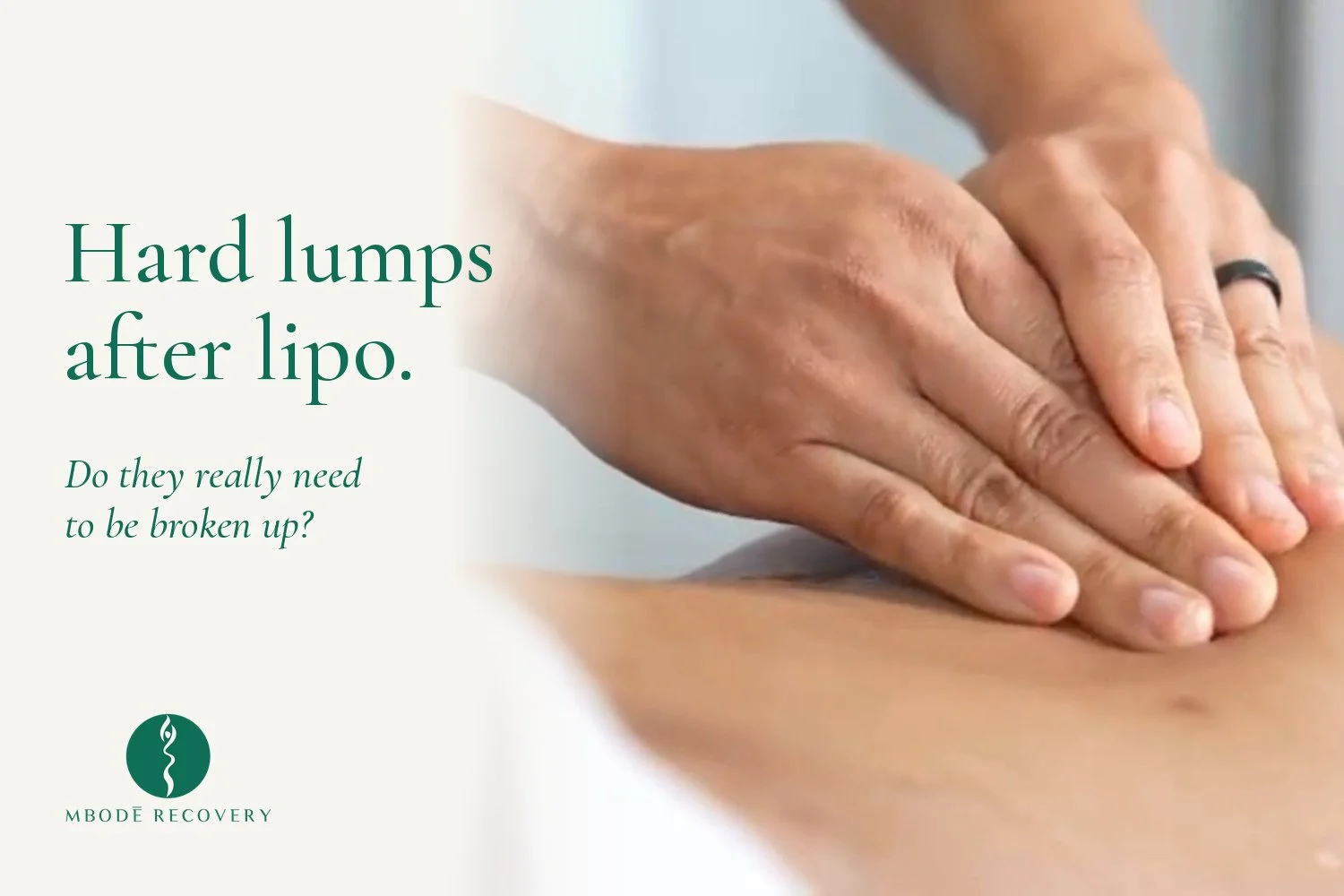
Hard lumps after liposuction do not automatically need aggressive massage. Firmness can reflect swelling, inflammation, changes in healing tissue, or fibrosis. The right approach depends on the cause, your stage of recovery, your symptoms, and your surgeon’s instructions.
If you’ve noticed a hard spot, you may be worried about your results. Maybe it feels tight, looks uneven, or seems different from the surrounding tissue.
Then someone tells you it needs to be “broken up.”
Suddenly, painful massage sounds necessary. You may find yourself tolerating forceful kneading or pressure that makes you brace because you’ve been told that’s how you prevent fibrosis.
Before deciding how to treat a firm area, though, we need to understand more about it.
What causes hard lumps after liposuction?
After liposuction, swelling and inflammation can contribute to tissue feeling firm, thick, or uneven. As healing progresses, scar tissue formation and remodeling can also affect texture and mobility.
These processes can overlap. An area may have both swelling and developing scar tissue, rather than one clear explanation.
Other causes include a hematoma, which is a collection of blood, or fat necrosis, which involves injured fat tissue. An unexpected lump deserves your surgeon’s assessment rather than an automatic label of fibrosis.[1]
Firmness is a finding. It isn’t a diagnosis or an instruction to press harder.
Why your healing phase matters
A firm, tender area early in recovery needs different consideration from a persistent restriction months later.
Early on, your body is responding to surgical injury. Swelling, bruising, and sensitivity may still be present. As recovery continues, swelling gradually changes and healing tissue continues to remodel. Your appearance and tissue texture can keep changing beyond the first few weeks.[2]
The number of weeks since surgery provides useful context, but it doesn’t tell us everything.
Two people at the same point in recovery may have different procedures, different levels of swelling, different sensitivities, and different surgical instructions. Even the same person may need a different approach from one appointment to the next.
In my practice, I consider timing alongside tissue response, symptoms, and the surgeon’s guidance. Reaching a certain week does not automatically mean someone is ready for more pressure.
Does painful massage help “break up” fibrosis?
Pain does not confirm that fibrosis is being released.
When something feels hard, it’s easy to assume it needs a stronger technique. But firmness doesn’t tell us how much force an area can safely tolerate. Healing incisions need protection from excessive force, and manual lymphatic drainage uses low pressure to support fluid movement.[2,3]
“Breaking it up” can create an expectation that treatment should hurt. It may lead someone to accept increasing pain or bruising as evidence of progress.
In my practice, increased swelling, soreness, or sensitivity after treatment is a reason to reassess. I consider the technique, pressure, duration, and whether the symptoms need further medical evaluation.
A temporary change under my hands is only part of the picture. How the person feels later that day and between appointments matters, too.
How I adapt post-op massage as you heal
My approach begins with assessing what is appropriate that day.
When cleared by the surgeon, I may begin with gentle lymphatic work. Depending on the healing phase and tissue response, I may then use more focused techniques around areas of restriction before returning to lighter work.
More focused does not automatically mean deeper or harder. It may mean changing the direction, pace, or duration of a technique.
Some sessions don’t need a more intensive phase at all.
If tissue is particularly sensitive, or symptoms have changed, the appropriate decision may be to stay gentle, modify the session, or pause treatment and refer back to the surgeon.
The purpose of a sequence is to support the person in front of me. It should remain adaptable.
When should you contact your surgeon about a lump?
Tell your surgical team about a new, enlarging, or increasingly painful lump. Redness, warmth, fever, unusual drainage, or a sudden increase in swelling also warrant prompt medical assessment.
These changes should be evaluated before continuing massage over the area. Your surgeon can determine whether examination, imaging, or another treatment is needed.
Don’t wait for your next massage appointment to raise a concern with your surgical team.
What should you do about a hard spot after lipo?
Start by bringing it to your surgeon’s attention and asking what postoperative care is appropriate for your procedure and stage of healing.
If massage is recommended, choose a qualified practitioner who follows those instructions, assesses your response, and adjusts treatment as you recover.
You shouldn’t have to prove your commitment to healing by enduring more pressure.
At MBODE Recovery in Smyrna, serving the Atlanta area, I consider your healing phase, tissue sensitivity, swelling, mobility, and response to care. Those factors guide what I do, how much I do, and when a different approach is needed.
Before trying to “break up” a hard spot, we need to understand what we’re working with.
If your surgeon has cleared you for postoperative massage, schedule a session with MBODE Recovery to discuss support for your recovery.
Frequently asked questions
Are hard lumps normal after lipo?
Firm areas are commonly experienced after liposuction. They can reflect swelling, inflammation, healing tissue, or fibrosis, and often more than one at once. Because a lump can occasionally be something else, such as a collection of blood, it’s worth asking your surgeon to assess any area that concerns you.
How long do hard lumps last after liposuction?
There isn’t one timeline that fits everyone. Swelling gradually changes and healing tissue continues to remodel, so texture can keep changing beyond the first few weeks. Your procedure, swelling, sensitivity, and surgeon’s instructions all shape how your recovery unfolds.
Does lymphatic massage need to hurt to work?
No. Pain does not confirm that fibrosis is being released. Manual lymphatic drainage uses low pressure to support fluid movement, and healing tissue needs protection from excessive force. If you notice increased swelling, soreness, or sensitivity after a session, that’s a reason to reassess the approach.
Can a hard spot after lipo be “broken up” with massage?
A hard spot isn’t automatically something that needs to be broken up. The first step is understanding what it is and where you are in healing. When massage is appropriate, more focused work doesn’t have to mean deeper or harder. It may mean changing the direction, pace, or duration of a technique.
When can I start massage after liposuction?
Only once your surgeon has cleared you. Timing varies by procedure, surgeon protocol, and how your body is healing, so your surgeon’s instructions always come first.
When should I contact my surgeon about a lump?
Contact your surgical team about a lump that is new, getting bigger, or increasingly painful, or if you notice redness, warmth, fever, unusual drainage, or a sudden increase in swelling. Don’t wait for your next massage appointment to raise these concerns.
About the Author
Mahalath Moore, LMT, is the founder of MBODE Recovery in Smyrna, Georgia, and the creator of MLIM™ (Manual Lymphatic Integration Method™). She brings more than 12 years of manual therapy experience, including over 9 years specializing in post-surgical recovery. Her work focuses on care that respects each client’s healing phase, their surgeon’s guidance, and how their body responds.
This article provides general education and does not diagnose postoperative lumps or replace medical care. Follow your surgeon’s instructions and obtain clearance before beginning massage or other recovery treatments. Individual results may vary.