Why Your Neck Tension Keeps Coming Back — And Why Massage Alone May Not Fix It
You've tried everything.
A new pillow. Stretching. Massage. Maybe even a night guard for your jaw.
And it helps — for a day, maybe two.
Then the tension comes back. Same spot. Same pressure. Same tightness sitting in your neck, jaw, behind your eyes, or at the base of your skull.
If that sounds familiar, you're not alone.
At Mbode Recovery in Atlanta, we work with clients every week dealing with chronic neck tension, jaw clenching, headaches, facial pressure, and nervous system overload that keeps returning despite constant effort to fix it.
And one of the biggest things we explain is this:
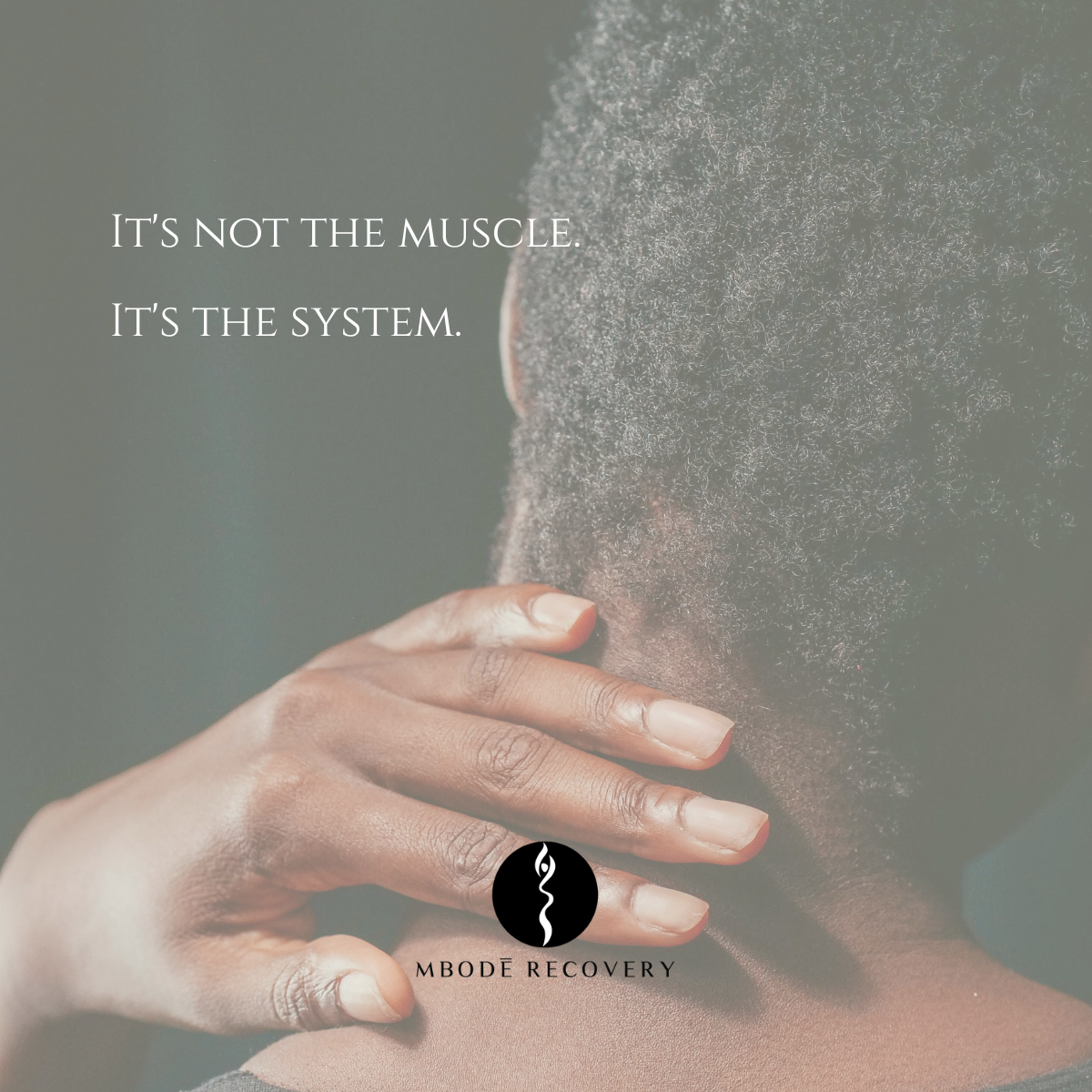
The problem is often not just the muscle itself. The problem is the system the muscle is responding to.
That changes the entire approach.
7 Signs Your Head and Neck System May Be Overloaded
These symptoms commonly appear together. They are often connected — not random.
1. Neck tension that returns within 24 hours
Temporary relief followed by recurring tightness is often a sign the tissue is guarding in response to stress, inflammation, posture, fluid congestion, or nervous system load.
2. Jaw clenching or grinding
Many people hold stress in the jaw without realizing it until the end of the day. Jaw tension and TMD-related patterns (commonly searched as "TMJ") are closely connected to neck tension and headaches.
3. Pressure behind the eyes or across the forehead
This can be related to congestion, restricted drainage, inflammation, or tension patterns through the head and neck system.
4. Ear fullness or pressure without infection
The jaw, neck, and ears are closely connected. Ear pressure or muffled sensation without illness is commonly associated with jaw tension and restricted movement through the neck.
5. Facial puffiness or heaviness in the morning
Poor drainage, stress, inflammation, sleep posture, and congestion can all contribute to this pattern.
6. Headaches that begin at the base of the skull
Occipital headaches are commonly associated with tension, restriction, congestion, and compression through the suboccipital region at the base of the skull.
7. Feeling "wired but exhausted"
When the nervous system stays stuck in stress mode, the body has a harder time recovering, regulating inflammation, and releasing tension patterns.
Common Triggers That Keep Neck Tension Returning
Chronic neck tension is rarely caused by one thing alone.
More often, it's a combination of stress, posture, nervous system overload, inflammation, jaw tension, and fluid congestion building over time.
Some of the most common triggers we see include:
Long hours at a computer
High screen time and forward head posture
Stress and nervous system overload
Jaw clenching or grinding
Poor sleep positioning
Chronic inflammation
Sinus congestion
Previous injuries or concussions
Shallow breathing patterns
Emotional or physical stress load
When these patterns build faster than the body can recover from them, the head and neck region often becomes the area that absorbs the load first.
Why the Head and Neck Is a System — Not Just Tight Muscles
The head and neck region is deeply connected through several overlapping systems:
Fascial chains
Breathing mechanics
Nervous system regulation
Jaw and cervical relationships
Fluid movement and circulation
When one part of the system becomes overloaded, the surrounding tissue often responds by guarding.
That guarding is what many people experience as chronic tension.
And if the tension is repeatedly released without addressing the stress load driving it, the body often returns to the same pattern again.
This is why massage alone may sometimes create temporary relief without long-term change.
How Stress Causes Neck Pain, Jaw Tension, and Headaches
Stress affects far more than emotions.
When the nervous system stays in a prolonged stress state, the body commonly braces through the jaw, neck, shoulders, and base of the skull.
Breathing patterns also change. Many people shift into shallow upper-chest breathing, which can affect circulation, drainage, and tissue mobility through the head and neck.
Over time, the region becomes both over-held and under-drained.
That combination — tension plus congestion — is one of the most common patterns we see in chronic head and neck discomfort.
The body is not doing something wrong.
It is responding the way bodies respond under sustained load.
Why TMD (Often Called "TMJ") Can Cause Headaches, Ear Pressure, and Neck Tension
The jaw, neck, ears, and head all influence each other more than most people realize.
This is why many people with TMD-related jaw tension also experience:
Headaches at the base of the skull
Pressure behind the eyes
Ear fullness without infection
Facial tightness
Neck tension that keeps returning
Jaw fatigue, clicking, or clenching
The jaw and neck are not separate systems. They constantly influence each other.
Stress and nervous system overload also play a major role. Many people unconsciously brace through the jaw and neck during stress — even while sleeping.
Over time, the body begins treating those tension patterns as normal.
How Lymphatic Drainage Affects Neck Tension, Facial Puffiness, and Sinus Pressure
Most people associate lymphatic drainage with post-surgical swelling.
But the head and neck contain important drainage pathways that influence pressure, congestion, fluid movement, and tissue mobility throughout the region.
When drainage slows due to stress, inflammation, poor sleep posture, congestion, or restricted movement, pressure can begin building through the face, neck, jaw, and sinus areas.
This often contributes to:
heaviness
puffiness
pressure
congestion
reduced tissue mobility
recurring tightness
Supporting drainage before deeper structural work may help the tissue respond more effectively and comfortably.
What System-Based Support Looks Like
Effective support for chronic head and neck tension requires working with the system — not fighting against it.
At Mbode Recovery, the focus is not simply "deep pressure" or forcing tissue to release.
The approach focuses on:
drainage before depth
nervous system regulation
reducing congestion
improving tissue mobility
restoring movement patterns
supporting the body's ability to downregulate
This framework is part of the MLIM™ Method developed by Mahalath Moore through years of clinical practice working with post-surgical recovery, lymphatic function, fibrosis patterns, nervous system regulation, and chronic tension presentations.
Head and Neck Tension Relief in Atlanta
If you're tired of temporary relief that disappears within a day or two, your body may need more than muscle work alone.
The Head + Neck Reset at Mbode Recovery in Atlanta is designed for people dealing with:
chronic neck tension
jaw clenching and TMD-related tension
headaches at the base of the skull
pressure behind the eyes
facial heaviness and sinus pressure
nervous system overload
recurring tension patterns
This is not a standard neck massage.
It is a system-based session focused on lymphatic drainage, nervous system regulation, tissue decompression, and restoring movement through the head and neck region in the sequence the body can actually respond to.
Book your session at Mbode Recovery in Atlanta or download the free Head + Neck Recovery Guide to learn more.
Frequently Asked Questions About Neck Tension and Jaw Tightness
Why does my neck tension keep coming back?
Recurring neck tension is often connected to stress, nervous system overload, jaw clenching, posture, inflammation, congestion, and breathing patterns — not just tight muscles alone.
Can stress cause neck pain and jaw tension?
Yes. Chronic stress commonly creates unconscious bracing through the jaw, neck, and shoulders.
Can lymphatic drainage help neck tension?
Lymphatic drainage may help support fluid movement, reduce congestion, and improve tissue mobility throughout the head and neck region.
Why do I wake up with jaw tension and headaches?
Jaw clenching, stress, sleep posture, restricted drainage, and nervous system overload can all contribute to morning jaw tension and headaches.
What is the difference between TMD and TMJ?
TMJ refers to the jaw joint itself. TMD refers to dysfunction or tension patterns affecting the jaw system. Many people use "TMJ" when referring to TMD symptoms.
This content is for educational and informational purposes only and is not intended to diagnose or treat medical conditions. Always consult your physician or qualified healthcare provider regarding concerning symptoms or medical concerns.